Estimating the value of an emerald ring comes down to two main steps: Valuing the gemstones in the ring and estimating how much the metal in it is worth.
Estimating the Value of an Emerald
The value of an emerald is based on four main characteristics: its color, clarity, weight, and cut. Among these factors, color is by far the most important, followed by clarity.
Here you can browse a selection of natural emeralds, which you can magnify and rotate virtually.
Cut and weight are not unimportant, but they do not affect emerald prices as much as color and clarity.

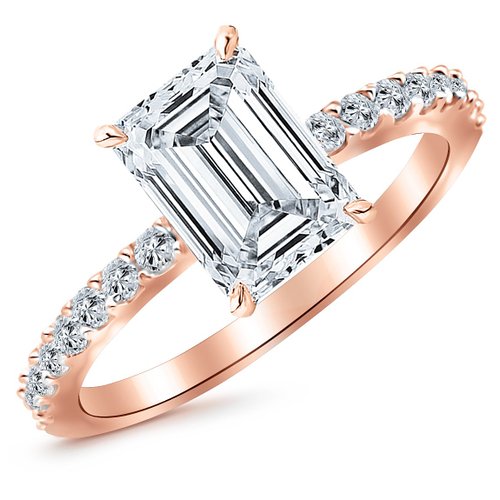
Ring with emeralds
In general, the more intense the color of an emerald is, the more valuable it will be.
All else being equal, a stone with a faint, pale hue is worth less than one with a more saturated color.
The most valuable emeralds tend to be the ones with an intense green color of medium darkness.
When it comes to clarity, an emerald with fewer and less visible internal flaws (inclusions) is more valuable than one with bigger and more obvious natural defects such as dark spots, lines, etc.
The exact clarity grade is determined by using a loupe or microscope, but you can get a rough idea of where a stone stands by looking at how clean it looks and comparing its appearance with that of other emeralds.
The cut of an emerald is not as important as color or clarity.
This is mainly because emeralds are cut to maximize the intensity of their color, and there are no strict guidelines for their cut proportions as is the case with diamonds.
Carat weight (1 carat = 200 milligrams) affects the value of an emerald in the following way: The bigger the stone, the higher its price per carat is, all else being equal.
That is, a 3-carat emerald will be more than three times as expensive as a comparable 1-carat one. This is because bigger stones are rarer and therefore command disproportionally higher prices.
There is an additional factor that affects emerald prices: whether the stone is natural or synthetic.
Synthetic emeralds have the same chemical compositions as natural ones, but synthetics are cheaper.
Natural emeralds, on the other hand, are more valuable as they are rarer.
Estimating the value of an emerald: If you are trying to figure out the approximate value of a stone you have, the easiest way to do so is to look at the prices of emeralds with similar color, clarity, carat weight, and cut. You can use this gemstone search engine to check prices for loose emeralds.
Such an estimate would by no means be 100% precise, but it will give you some idea as to what similar stones are worth.
You can also sell your emerald jewelry online on a jewelry auction website like Worthy — you only need to send your jewelry piece to them, and they will appraise it and offer it for sale, and will send you the money when your jewelry is sold. Important: To be accepted for sale on Worthy, your emerald needs to be bigger than 2 carats.
Valuing the Metal in an Emerald Ring
In addition to the value of the gemstones in a ring, the cost of its metal is the second major part of the piece’s total value. Estimating it comes down to figuring out what metals the ring contains and what their weight is.
Emerald rings are usually made with gold (white or yellow) or platinum.
If the ring is made with white or yellow gold, the first thing you need to know is its karat. Dividing this number by 24 (the karat number of pure gold) will give you the percentage of pure gold the ring contains.
For example, an 18-karat ring contains 75% pure gold (18K divided by 24K).
Thus, if the metal body of an 18K ring weighs 10 grams, then you have 7.5 grams of pure gold. To estimate its value, you will need to look up the market price of gold per unit of weight.
(There are other metals in a gold alloy, but their value is much lower compared with that of pure gold.)
Estimating the value of the metal in a platinum ring follows similar steps (and the same principles apply to jewelry made with other metals as well).
Usually, between 90% and 99% of the metal in such jewelry is pure platinum, and if you also have its market price, you can get a rough estimate of how much the metal in the ring is worth.
Important:
The value of the metal in a piece of jewelry estimated this way will be lower than what a jewelry store would sell it for.
This is because the price of jewelry also reflects the value of its design and brand, and includes a premium that covers the jeweler’s costs and provides a profit.
In contrast, the value estimate proposed here will actually be closer to the price at which refineries buy metal to melt it down.
Consider an Appraisal for Your Emerald Ring
The methods for valuation discussed here will give you an approximate value for your jewelry.
However, if you want to get a more precise figure, consider having your emerald ring appraised by a professional, who will also issue you an official document.
Appraisers provide such services for a fee, and the valuation process is much more thorough than what you can do on your own.
Important: If you are planning on selling your emerald ring, remember that the value you or the appraiser will estimate is likely to be higher than the price any jeweler or dealer would offer you.
In many cases, second-hand jewelry buyers purchase such items at prices that are less than 50% of what they retail at. These purchasers often break the jewelry down and sell the stones and metals separately as raw materials.
Where to Buy Emeralds?
We recommend James Allen (read review) because you can take a 360-degree look at any emerald before having it set in a piece of jewelry.
We also recommend Blue Nile and Ross-Simons.