How to Evaluate Turquoise Quality
Since turquoise is a water-based stone that forms in rocks, you will always notice pieces of the original rock within the stone.
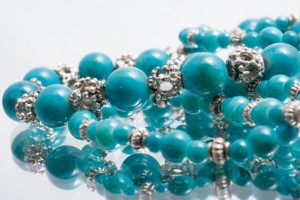
Turquoise beads
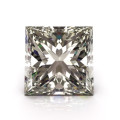
Compared to diamonds, turquoise is porous because it has some amount of water content.
Generally, turquoise needs some kind of treatment to enhance its color and make it suitable for jewelry.
Always ask whether and how the stone has been treated before buying.
Natural turquoise is more expensive that treated varieties, and you should make sure you are not paying more than you need to.
Some vendors sell fake turquoise and it is not always easy to recognize it, especially if you are shopping online.
Generally, a natural stone will have a color that varies in intensity and is not perfectly even, whereas fakes look too perfect.
Keep in mind that sellers are legally required to disclose all treatment of the turquoise they sell and also whether the stone is real.
Types of Turquoise
Turquoise can be seen in different variations, including:
Natural Turquoise
No alteration is done to the stones. They are cut, shaped, and polished before placed into jewelry.
Natural turquoise tends to change color when it is exposed to oils, light, detergent, and perspiration. This is also the most expensive type.
Stabilized Turquoise
The natural mineral has been modified to harden the stone by using epoxy or acrylic to fill the material’s pores. This process preserves the stone’s color and ensures that it will not change over time.
While this type of turquoise makes great looking jewelry, it should be priced lower than natural turquoise.
Color-Enhanced Turquoise
Has undergone the same process as stabilized turquoise, but dye has been included to enhance the color of the stone.
This process uses soft, chalky, pale blue material and can be readily recognized because the color of the turquoise looks unnatural.
With a blade, this type of turquoise can be scratched easily, unlike a high quality turquoise.
Compared to natural or stabilized stone, color-enhanced turquoise is lower in price.
Reconstituted Turquoise
This type is made from chalky turquoise that is ground into powder and mixed with dyes and epoxy then molded into a solid form. The stone is then cut and placed into the jewelry.
These gemstones resemble natural turquoise but are priced much lower than treated turquoise.
Simulated Turquoise
This variety is made from plastic and contains no gemstone but is meant to imitate a turquoise.
These stones are categorized as costume jewelry and should be priced accordingly.
Where Can Turquoise Be Found?
Turquoise is found in its natural state in places with dry climates around the world. It can be mined in the U.S., Mexico, Iran, Chile, and China. While the characteristics of each stone are very similar, different mines produce slight variations of turquoise.
Let’s take a look at some of the places in North America where you can find turquoise.

Turquoise stones
Sleeping Beauty Mine
Named after a set of mountains that resembles a sleeping woman, the Sleeping Beauty mine has a beautiful array of turquoise stones.
The mine is located in Globe, Arizona, and is known for the striking light blue colored turquoise it produces.
Currently, it is one of North America’s largest mines.
Little Chalchihuitl
Located in Los Cerrillos, New Mexico, the Little Chalchihuitl mine is one of the oldest mining spots in the U.S.
The turquoise found here is a stunning light green-blue color with gray or brown streaks, making the stone incredibly interesting to look at.
Royston Turquoise Mine
With stones that range in color from emerald green to soft blue, the Royston Turquoise mine is a popular one that allows the public to enter the mine and find turquoise independently.
For a small fee, you receive a bucket and can spend a few hours searching for your own stones.
This mine is located near Tonopah, Nevada, and will not disappoint you.
The beautiful greens and blues of each stone stand out against its golden brown matrix, and you can be sure that the turquoise you find there is of high quality.
Ajax Mine
The Ajax Mine is located in south central Nevada.
In this mine, one can find turquoise stones ranging from light blue with streaks of dark blue to dark green with light blue spots.
These green and blue stones are not as common as the regular blue variety, making this mine an interesting place to find turquoise in its natural state.
Turquoise Colors You Can Find
No matter which mine you choose, the turquoise you find there will be unique. The color of each stone will depend on its surrounding elements.
If you choose a mine with lots of iron or zinc present, the stones will have a yellowish green shade, whereas the mines with more copper present will produce bluer turquoise stones.
Some stones will exhibit a web-like matrix, while others will have thicker lines running through them. Colors of the matrix will also vary, giving you a wide selection of natural turquoise stones to choose from.
Symbolism and Meaning of Turquoise Around the World
Turquoise has long been a symbol of wealth and opulence in ancient cultures, but fascination with this striking gemstone has never been stronger than today. No matter where it is found, turquoise is always associated with strong, positive traits such as purity and healing.
Turquoise was prominent in several ancient cultures, which prized it for its vibrant hue and perceived spiritual powers. Today, those early myths continue to shape public perception of turquoise, making it one of the most popular stones and colors in the world.

Necklace with turquoise gemstones
Native American Cultures
When Southwestern Native Americans found turquoise, they saw in it the blue, open sky that stretched over their desert homelands.
It also represented life-giving water and the green tones of the earth.
Because of the stone’s deep connection to the world around them, Native Americans saw turquoise as a protecting force.
It drew in helpful spirits, repelled demons, brought prosperity and encouraged the free flow of thoughts in its wearer.
Carved turquoise animals guarded their tombs, warriors decorated their weapons with turquoise beads and the stones were used heavily in amulets and jewelry.
The Middle East and Mediterranean Civilizations
Turquoise was first mined in Egypt approximately 5000 years ago. Cleopatra kept a collection of the gem and it is a common sight in wealthy tombs, but it became most widespread in Turkey, Greece and Persia.
Persians wore the stone, decorated with it and even lined the domes of their palaces with turquoise.
Turquoise symbolized heaven for the Persians and appeared in every aspect of their daily life and ornamentation.
Today, Iran is still a major source of the world’s turquoise supply. In Greece, it signified purity and was worn by maidens.
Turkey, the namesake of turquoise, introduced the gem to Europe along the Silk Road, although it never gained such prominence in Western civilizations.
Tibetan Culture
Tibet is another turquoise-rich nation, and turquoise bracelets and pendants are a frequent sight on both the civilian population and Buddhist monks.
Besides valuing the stone for its serene color, the Tibetans appreciate the gradual shift of turquoise’s color from blue to green as it is worn.
This signifies the development of wisdom as well as the cycle of life and death, which is central to their religion.
It is thought that Tibetans began mining the stone at roughly the same time period as the ancient Egyptians.
Wearing Turquoise Today
Turquoise has not faded in popularity since the early days of human civilization. Today, it is a versatile fashion statement and is still believed to hold beneficial properties.
Turquoise is said to clear thoughts, open the heart and enhance spirituality. It is a gem of emotional healing and well-being. As a gift, it symbolizes well-wishes, good health and hopes for future prosperity.
To offset turquoise’s stunning color, wear it with white, gold and red, but don’t let the outfit become too garish.
Turquoise is eye-catching and demanding, meaning it shouldn’t be made to compete with other accessories and colors.
With a little thought beforehand, you too can experience the calm tranquility that comes from this most ancient of gemstones.
Turquoise Care
Here are some care and cleaning tips to keep you turquoise in good shape:
• Do not wear turquoise jewelry while doing heavy work.
• Keep out of extreme weather.
• Do not use jewelry cleaners because the chemicals may harm the stone. Instead, use a soft cloth and clean with warm water.
• Store turquoise jewelry separately from other stones to prevent scratching.