• Jewelry Fashion
  • Shopping & Selling Tips
  • Jewelry Care
  • Gemstones
  • Metals
  • Materials
  • Jewelry Basics

Home » Jewelry Cleaning & Care Tips »

Why Your Pearl Necklace Should Be Knotted

What Is Pearl Knotting?

Pearl knotting is the practice of tying knots between the pearls strung in a necklace. Next time you are looking at a pearl strand, take a closer look at the cord. Chances are you will see knots between the pearls on it.
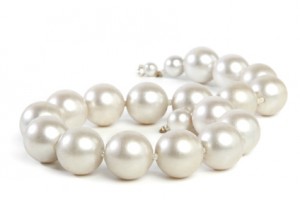
Pearl necklaces need to be restrung regularly.

Pearl necklaces need to be restrung regularly.

Why Are Pearls Knotted?

One of the reasons to knot pearls is to keep all of them from falling off the strand if it breaks.

If that happens, the knots will ensure that no more than one or two pearls drop on the floor instead of all at once.

Knotting is also done for another reason, which is no less important.

When pearls are strung on a strand, the adjacent ones will touch, and after some time, the rubbing will result in damage to the pearls’ surface. To prevent their shell from chipping, pearls are often separated by knots.

Not all pearls are knotted, though. Fake pearls usually don’t have a surface that is as sensitive to pressure and rubbing, and that’s why they don’t need knots. Often, low-quality pearls are also not knotted.

Restringing Pearls

Keep in mind that pearl necklaces need to be restrung regularly. This is done because the strand wears with time and becomes weak, and you don’t want your pearl necklace to break suddenly.

How often should you have your pearl necklace restrung?

The usual period is every four or five years, but this also depends on how often you wear your necklace.

Check your necklace regularly, and if the strand is worn out and stretched thin, don’t put off restringing.

Look out for these signs:

Dark cord: If the cord has become dark, this means that it is old and most likely weak. You should have it replaced or you will risk breaking it.

Loose pearls: Look at the cord and see if the pearls are tightly held between the knots. If the pearls are loose and there is a distance between each pearl and the knots beside it, this means that the cord has become stretched with time. That’s an indication that the cord has become thin and you should have the necklace restrung.

Buying a Knotted Pearl Necklace

When you are considering buying a pearl necklace, looking at its cord can help you evaluate how well the necklace is made.

First of all, a pearl necklace should have knots for the reasons already mentioned above, especially if the pearls are natural and expensive.

Make sure that the pearls are not loose between the knots. This might be a sign that the cord is not new.

And while we’re at it, get a necklace with a clasp that is durable. A lobster clasp is a good choice and is more reliable than the cheaper spring ring clasp.

Disclosure: Some of the links on our site may help us earn affiliate commissions from advertisers. As an Amazon Associate, we may earn from qualifying purchases. Learn more

Read Next

  • What Your Jewelry Reveals About Your Personality
  • Warning: Jewelry You Should Not Put In an Ultrasonic Cleaner
  • How to Choose a Diamond Pendant
More: Gemstones Necklaces Pearls


Related Articles
  • Making home made jewelry
    Why You Should Have Your Jewelry Inspected Regularly
  • bracelet
    Wearing and Caring for Your Herringbone Chain Necklace
  • diamond-fire
    Diamond Fire: What It Is and Why You Should Care About It
  • Jewelry, gold, necklaces, rings, bracelets, watch, wealth
    Why Polishing Can Be Bad for Your Rings and Other Jewelry
Additional Resources
  • Learn how to knot pearls or restring pearls…yes, it’s possible!
  • Video Tutorial – Hand Knotting Pearls
  • Pearl Knotting – How to knot a string of pearls
  • How to Knot Pearls – A FULL Instruction Video by The Pearl Girls

Popular Topics
• Rings
• Necklaces
• Bracelets
• Earrings
• Diamonds
• Pearls
• Gemstones
• Gold Jewelry
• Silver Jewelry
• Platinum Jewelry

  • More Jewelry Topics
    • Why You Should Have Your Jewelry Inspected Regularly
    • How to Buy Turquoise – A Guide
    • What Opal Is a Symbol Of
    • How to Clean and Care for Your Emeralds
    • The Most Common Diamond Color: Should You Buy It?
    • VVS and VS Diamond Clarity Compared: What Is the Difference?
    • How to Buy a Ruby: A Guide to Evaluating Quality
    • How to Buy Amethyst Jewelry: Complete Guide
    • What Are Clarity Enhanced Diamonds?
    • How to Get Your Diamond Certified by the GIA


  • The Magazine
    • Home
    • About Us
    • Contact Us
    • Privacy Policy and Disclosures
  • Categories
    • Jewelry Fashion
    • Shopping & Selling Tips
    • Jewelry Care
    • Gemstones
    • Metals
    • Materials
    • Jewelry Basics
  • Topics
    • Diamond Cut Quality Guide
    • Rings
    • Necklaces
    • Bracelets
    • Earrings
    • Diamonds
    • Pearls
    • Gemstones
    • Gold Jewelry
    • Silver Jewelry
    • Platinum Jewelry
  • Connect with Us
    Connect with Jewelry Notes via FacebookConnect with Jewelry Notes via Twitter

 
Copyright © 2012-2025 Jewelry Notes
All rights reserved.
33604540
Jewelry NotesLogo Header Menu
  • Jewelry Fashion
  • Shopping & Selling Tips
  • Jewelry Care
  • Gemstones
  • Metals
  • Materials
  • Jewelry Basics