As far as precious gemstones are concerned, opals have a relatively sordid history. While they are not as precious as diamonds, opals are no less beautiful and have been used in jewelry for centuries. They’re even mentioned in texts from Pliny the Elder, a philosopher from the years 23 to 79 AD.
Opals come in a wide range of colors. White and green are by far the most common, while red and the fabled black opal are the rarest.
Opal Meaning and Symbolism

Opal gemstone
Birthstone Significance
Opal is considered the birthstone of October. It is also the theme gift for the 14th and 18th wedding anniversaries.
However, the popularity of the stone saw a marked decrease during The Middle Ages, and its popularity has never quite recovered.
Mystical Beliefs
In mystical circles, opal is considered a stone representing hope, innocence and purity. It has strong connotations of happiness, faithfulness, loyalty and confidence.
All of these are in spite of its significant period of darker connotations.
Healing Powers of Opal
For those who believe in the healing power of stones, opal is good for eye infections and diseases, as well as the enhancement of other healing processes.
In more esoteric circles, the opal was considered to grant the power of invisibility when wrapped in a bay leaf and carried in the hand. The Greeks believed it granted the power of prophecy.
While it is unlikely that these beliefs are true, they are some of many mystical abilities the stone is believed to grant.
Opal and Luck
For much of its long history, opal was regarded as a lucky stone.
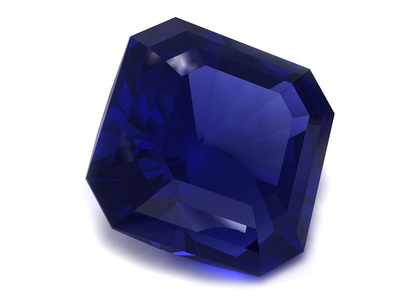
People believed that a cut and polished opal would have the qualities of any other stone it shared a color with — a blue opal would be similar to sapphire, for example.
Opal can be quite a difficult stone to work with, and it is easy to shatter when cutting or mounting in jewelry. Breaking an opal in the process of creating jewelry was once considered bad luck.
Mythology
In Greek mythology, opals were considered the stone form of the tears that Zeus wept after the defeat of the titans.
Indian lore considers it part of the Goddess of Rainbows after she turned to stone to avoid the romantic advances of other gods.
Arabic lore holds that the stones fell from the sky in flashes of lightning, imbued forever with their fire from the fall.
Opal Value Factors
The brilliant color variations and iridescence unique to opals make these lovely stones some of the most fascinating gems to own. There are, however, many different varieties and quality factors to consider when shopping for opals.
Opal is a very soft gemstone (5.5-6.0 on the Mohs scale of hardness). It is certainly not the most durable gemstone you can find, but it surely is pretty beautiful.
Opals are classified and priced according to the overall body color, the unique play of color and the transparency displayed by each gem.

Opal gemstone
Body Color
Body color refers to the underlying or overall color of the opal.
Colors range from colorless to milky white, gray and semi-black to black, and a wealth of vivid colors including red, orange, yellow and blue.
The depth and richness of color is reflected in pricing.
Play of Color
A phenomenon unique to opals, consisting of multiple color flashes within the stone that change depending on the angle from which the stone is viewed.
The density, intensity and distribution of these color flashes are determining value factors.
Transparency
Opals are considered transparent when another object placed on the opposite side can be viewed through the stone; translucent, defined as having the ability to allow diffused light to pass through the entire gem; or opaque, meaning light does not penetrate the stone.
Transparency is of higher value than opaqueness.
Color
In general, the rarer the color of a gemstone, the more sought after and expensive it is. When it comes to fire opals, the most valuable color is red.
Orange and yellow are a bit more common and cheaper, but these hues are still among the most expensive compared with other opal colors.
Whatever the color of an opal, the more intense its hue, the more valuable it is. For example, stones with a saturated red color are more expensive than those with a pale reddish hue.
In addition, opals that have high brilliance, i.e., stones whose colors are bright, are more valuable than gems with more subdued and duller hues.
Clarity
Opals that have fewer internal flaws (inclusions) look cleaner and are more valuable than more heavily included stones.
Although perfectly clean opals are rare, and it is natural for a stone to have some inclusions, you should stay away from gems that have cracks. These flaws usually run through the inside of the stone up to its surface and can put the integrity of the gem at risk.
Look for opals that look reasonably clean to the naked eye and whose tone is as even as possible. Stones that have big and visible flaws, especially when they are located prominently, should be discounted.
Size
The bigger an opal, the more expensive it is. This is so not only because of the sheer size of the stone but also because larger gemstones are rarer (and they often cost more per carat).
However, keep in mind that bigger stones are also likely to have more visible flaws.
Cut
Opals are usually cut in an oval shape, but you can also see faceted gems in a round or another form. It is up to your personal taste what type of cut you prefer.
However, if you are considering a faceted stone, keep in mind that because opal is relatively soft, the edges of its facets will become less sharp with time depending on how often you wear the gemstone.
Types of Opal
Common Opal
Also termed potch opals, this is usually an opaque opal exhibiting a milky but lustrous solid body color without any play of color.
Precious Opal
Flashes of bright iridescent color or play of color is clearly evident within the opal.
Precious opals usually have a white or cream body color.
Fire Opal
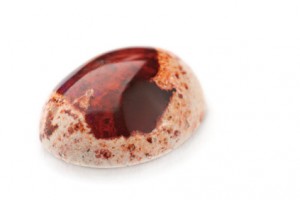
Transparent to translucent opals with a deeply saturated body color ranging from red to orange to bright yellow. Since many fire opals are found in Mexico, they are sometimes referred to as Mexican opals.
Fire opals do not usually exhibit play of color, but if they do, they are referred to as precious fire opals.
What Are Doublets and Triplets?
Opal forms in cracks and fissures deep in the earth.
Most often found in thin layers or plates, opal is sometimes left attached to the harder mother rock or, more frequently, bonded to a supporting layer of stronger material such as obsidian or glass.
The result of this process is known as a doublet. Doublets enhance the play of light an opal has to offer while adding durability.
Doublets can also be created by attaching one layer of glass-like or plastic material to the back of a real opal.
In addition to that layer on the back, triplets have a transparent layer on the top of the gemstone. These additions make an opal look bigger and are often colored to make the stone’s hue seem more saturated.
Since the real opal in doublets and triplets is a usually just a thin slice, these forms are cheaper than solid opals of similar size.
However, keep in mind that doublets and triplets are also less durable – the layers can get damaged, and the stone can become cloudy when repeatedly exposed to water.
Buying Opal
When shopping, first determine the type of opal you are looking at, then consider the value factors.
Ascertain the quality of iridescence; the play of light should be visible from all angles with strong color patterns representing a range of color.
Consider the body color. Dark overall color is rarer and thus commands higher pricing.
Take transparency into account. Generally speaking, greater transparency equals higher value.
Examine the opal for doublets and triplets, which make the stone far lower in terms of value than solid opals.
Popular Gem-Quality Opals
• White Opal: The most common precious opal found on the jewelry market. It exhibits play of color on white or light body color. Pricing is determined by intensity of iridescence.
• Black Opal: An opal commanding high prices with body color ranging from gray, black and blue to green. This dark background makes the fiery play of color more visible.
• Lightning Ridge Opal: High quality black opal, mined in Lightning Ridge, Australia, the “Black Opal Capital of the World.”
• Crystal Opal: A transparent or translucent opal that exhibits play of color.
• Harlequin Opal: An opal with vivid patches of iridescence in the shape of diamonds or rectangles; one of the rarest and most prized variations.
• Pinfire Opal: An opal containing many pinpoints of iridescence throughout the stone.
• Cat’s Eye Opal: A very rare opal containing a thin line of iridescence that is visible from multiple directions and capable of tracking across the stone.
• Mexican Fire Opal: A bright orange to red transparent opal mined in Mexico, the largest supplier of fire opals.
• Jelly Opal: Also called water opal, this is a colorless, transparent common opal with a gel-like appearance. This term also refers to a transparent precious opal having a gel-like appearance with a bluish sheen.
Cleaning and Caring for Different Forms of Opal
The method of cleaning opal jewelry depends on the form of the opal. Some opals are just a single piece, while others are two or three layers of opal glued together.
Red opal gemstone
You should be able to determine whether you have a single opal, a doublet opal, or a triplet opal just by looking at it.
You can make the cleaning solution by mixing unscented detergent with ½ cup of lukewarm water.
If you have a solid opal, you can swish it around in the water for a few seconds and then wipe it clean with a microfiber cleaning cloth.
If you have a doublet opal or triplet opal, do not immerse it in the solution or the water may loosen the glue and separate the pieces. Instead, put a small amount of solution on the microfiber cloth and gently clean the opal with it.
Generally, opal jewelry should be cleaned every couple of months. This way, it will not accumulate too much dirt, and the cleaning process will be easier.
Cleaning Surrounding Metals and Gemstones
Some opal jewelry contains diamond chips or other gems that will also need cleaning. The metal the opal is set in will need cleaning as well.
A toothbrush may be used with the same cleaning solution to make the metals and gemstones sparkle, but avoid using the toothbrush on the opal itself.
Storing Opals
Avoid storing opal jewelry in any location that can dramatically change temperature, and keep your piece of jewelry away from dry areas.
If that isn’t possible, wrap it in a cloth sprinkled with a few drops of water, and put it in a plastic bag. If the air is normal, you can store it alone.
If you want to store your opals with other jewelry, you can wrap them in fabric to avoid scratches.
Wearing Opal Jewelry
Opals are made of sand and water. Most opals have approximately 2-10% water content, and if they dry out, they can crack.
They can also crack when they’re exposed to any extreme temperature change. Be careful when you step out from a heated area into extremely cold temperatures and vice versa.
Avoid prolonged exposure to heat, and do not let the jewelry come in contact with very hot or cold water.
Also, remove the jewelry if you need to use soap or lotion in an area where the jewelry lies. This can cause a buildup on the ring and dull its shine, and will force you to clean it much more often.
Wearing your opal jewelry often will help it to look its best. Since opals have a certain degree of water content, constantly wearing them and exposing them to the humidity in the air and in the skin is good for the gems. It will prevent the opals from drying out and preserve their beautiful colors within.
Opal in Literature
The history of opal takes a darker turn in Sir Walter Scott’s novel Anne of Geierstein.
In it, the titular character Anne wears an opal holding mystical properties. It flashed red when she was angered and sparkled with great beauty when she was in high spirits.
Several drops of holy water splashed on the stone in the climax of the book, and soon after Anne took ill and died. This gave opals a negative connotation as demon stones.
After the publication of the novel, opals fell out of public favor. The stone began to be associated with bad luck and death.
In Russia, people believed that the stone signified the evil eye. If a vendor had an opal in their wares, it was bad luck to purchase anything at all from them.
Opal has come back into favor in more recent times, but it has never entirely shaken the disfavor it once held.
It is still a beautiful stone and quite common in jewelry around the world. However, it can never be said that opal is not a storied stone.