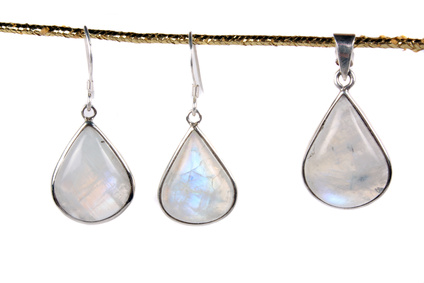
Lapis lazuli is the stone that decorated the headpieces and sarcophagi of ancient pharaohs, was carved into decorative sculptures and vases, and was ground into pigment for Cleopatra’s eyeshadow and masterpieces in oil paint.
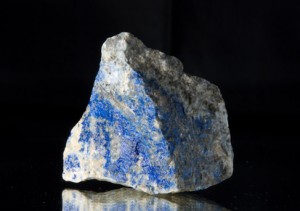
Lapis lazuli crystal
Lapis lazuli gets its physical properties from several different minerals, including lazurite, mica, pyrite and calcite.
It usually forms inside crystallized limestone as the result of trapped chlorine’s interaction with intense magma.
The heat changes the stone’s chemical properties, accounting for its rich blue shade.
Where Can You Find Lapis Lazuli?
While lapis lazuli is primarily mined in Afghanistan, strains of it have been found in the Americas — as far north as Canada and as far south as Chile and Argentina.
In the United States, most deposits are located in California and Colorado.
California actually has a commercial lapis lazuli mine, the Big Horn Mine, located near Wrightwood. Lapis lazuli also has been mined at Crested Butte, Colo.
Individuals should hunt in geographical areas known to produce crystallized limestone and marble, as lapis lazuli will often be found with them.
For those who like to travel as part of a mining hobby, veins of lapis lazuli can also be found in Russia, Siberia, Pakistan, India, Burma and Italy.
How Can You Tell You Have Found Authentic Lapis Lazuli?
It might be hard to differentiate lapis lazuli from other blue gemstones found in nature, such as turquoise, blue quartz or azurite.
True lapis lazuli will contain some thin streaks of white calcite or glittery gold flecks of pyrite.
Quality stones will only feature small traces though. The blue shade, which ranges from brilliant royal to a deeper navy, should be the predominant color.
Lapis lazuli will also release a telltale rotten egg smell when exposed to hydrochloric acid, so those looking for it in nature should carry a small amount of the acid in a field kit.
Uses of Lapis Lazuli
Once an individual finds some lapis lazuli, they might not know how best to utilize it.
First and foremost, a polished lapis lazuli stone makes for some stunning jewelry and is often set in gold to accent the gold pyrite spun throughout its surface.
Even small lapis stones can have a strong visual impact when fashioned into pendants and delicate drop earrings.
Lapis lazuli also has been used historically for its healing powers. In ancient Egypt, lapis lazuli was carved into the shape of an eye, the “third eye,” and was meant to awaken intuition.
It has also been used in Hindu culture to open the throat chakra and promote healing of the thyroid, throat, gums and neck vertebrae.
It is believed that lapis lazuli stones used for healing purposes need to be recharged in sunlight for at least an hour to be effective over time.
Lapis lazuli can also be ground into pigment for unique clothing dyes. Though it was once used in oil and tempura paint, the process has become too expensive and is reserved for professionally restoring ancient paintings.
The History of Lapis Lazuli
Lapis is a semi-precious stone that’s been important to cultures around the world for thousands of years.

Lapis lazuli gemstone
According to historical records, lapis has been mined in Afghanistan for over 5000 years.
The stone has been found in many different historical contexts, from beads in ancient burial sites to decorative jewelry in Egypt and Sumeria.
Beautiful lapis lazuli jewelry and decorations were used by royalty for centuries. In many cultures, it was known as a “sapphire” because of its blue hue.
In reality, lapis lazuli’s name means “stone of the sky.”
Cultures continued to use this highly-valued stone for years.
Ancient Egyptians created scarabs from lapis lazuli to be buried with their dead, while Chinese emperors used it in decorations.
For centuries ground lapis lazuli was the only reliable way to obtain blue pigment for inks and paints. It was highly prized by painters and scribes until the early 19th century. A synthetic variety finally displaced lapis’ status, though it still retains its value and beauty today.
What Is Lapis Lazuli a Symbol Of?
The beautiful blue hue of lapis corresponds with Aquarius in the Zodiac and is often associated with the planets Saturn and Venus.
It’s the most common gemstone for a 9th wedding anniversary and symbolizes wisdom, truth and friendship.
Lapis lazuli along with its twin, sapphire, is the traditional birthstone for people born in September.
Giving a Gift of Lapis Lazuli
Jewelry made from lapis lazuli is a gorgeous addition to any wardrobe.
Giving a gift of lapis is a way of showing that you value your friendship with the recipient.
Because it comes in so many forms, there’s a lapis lazuli piece for everybody. Pendants and bracelets are particularly popular, though you can also find lapis rings and earrings.
Most lapis lazuli stones are not “pure” lapis, because the stone is very rarely found alone in nature.
Instead, lapis is often flecked with other minerals, typically pyrite. The lovely blue and gold combination looks fantastic with many outfits and in many occasions, making it an excellent gift.
Lapis lazuli’s history and symbolism make it a beautiful and fun to wear stone. Consider purchasing a piece of jewelry featuring lapis lazuli next time you’re looking for something versatile and gorgeous.